The Federal Layoffs Aren’t as Massive as They Seem
The Numbers Behind the Firings: Why 2025’s Federal Layoffs Aren’t as Massive as They Seem
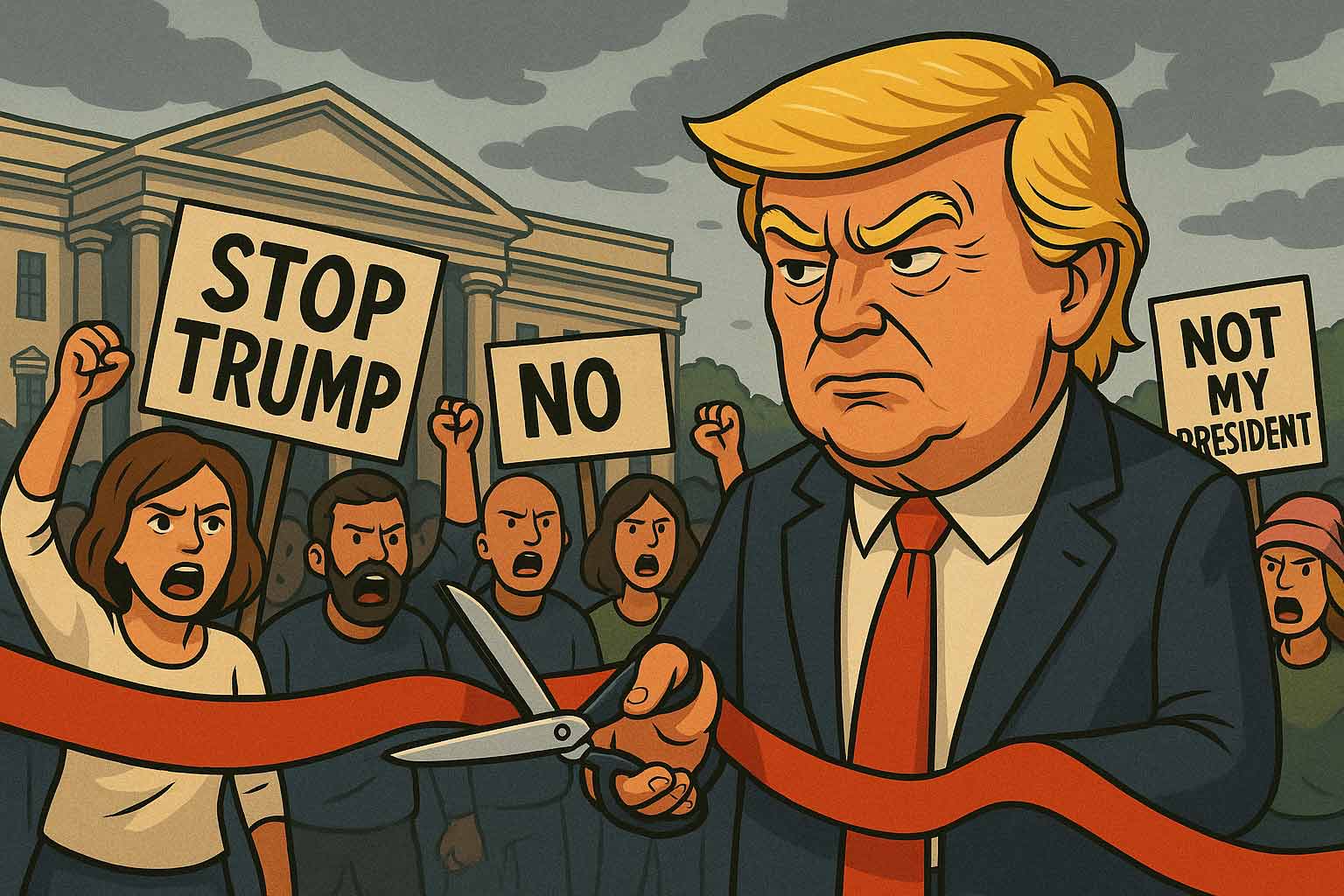
When headlines announced that thousands of federal workers were being fired across Washington, the reaction was immediate — shock, frustration, and fear of a government hollowed out from within. But a closer look at the data tells a more nuanced story: while the total number of layoffs in 2025 is historically significant, the percentage of employees dismissed from most agencies remains relatively small.
A Story of Scale: Thousands vs. Millions
The U.S. federal government employs roughly 2.2 million civilians. Against that backdrop, even headline-grabbing figures — like 10,000 firings at USAID or 7,000 at the IRS — translate to just fractions of total federal employment.
In percentage terms, most agencies saw staff reductions between 1% and 5%. A handful of departments such as USAID (~85%) and the Consumer Financial Protection Bureau (~20%) were clear exceptions, but these agencies are relatively small compared to giants like the Department of Defense or Treasury.
The result? A sweeping narrative of federal upheaval that, in percentage perspective, resembles more of a strategic reshuffling than an across-the-board purge.
Which Agencies Were Affected
| Agency / Unit | Approximate # Fired | % of Agency Workforce | Notes / Context |
|---|---|---|---|
| USAID | ~10,000 | ~85% | Nearly entire direct-hire staff dismissed; only a few hundred retained. Wikipedia |
| Consumer Financial Protection Bureau (CFPB) | ~1,500 | ~20% | Major reduction of term and temp workers. Wikipedia |
| USDA (Agriculture Department) | ~5,600 | ~11% | Cuts across research, conservation, and headquarters roles. Wikipedia |
| Department of the Interior / Bureau of Land Management (BLM) | ~2,300 | ~7% | Included ~800 BLM staff. Wikipedia |
| U.S. Forest Service (USFS) | ~3,400 | ~6% | Probationary and non-career employees terminated. Wikipedia |
| Centers for Disease Control and Prevention (CDC) | ~1,300 | ~5% | Disease surveillance and reporting staff fired; some rehired later. The Guardian |
| National Park Service (NPS) | ~1,000 | ~4% | Operations and maintenance roles cut nationwide. Wikipedia |
| Internal Revenue Service (IRS) | ~6,000–7,000 | ~4% | Probationary and processing staff terminated. Wikipedia |
| National Institutes of Health (NIH) | ~1,200 | ~3% | Research and administrative staff reduced. Wikipedia |
| Department of Energy / NNSA | ~1,200 | ~3% | Included National Nuclear Security Administration positions. Wikipedia |
| Department of State (including Foreign Service) | ~1,300 | ~2% | Mid-year dismissals of civil and foreign service employees. Wikipedia |
| Bonneville Power Administration (BPA) | ~400 | ~2% | Staff cuts within the Department of Energy. Wikipedia |
| Department of Defense (civilian staff) | ~5,400 | ~1.5% | Non-career and probationary workers affected. Wikipedia |
| Federal Aviation Administration (FAA) | ~400 | ~1% | Support staff reductions; air-traffic controllers unaffected. Wikipedia |
| Inspectors General (various agencies) | 17 | <1% | 17 federal Inspectors General were dismissed in January; some terminations ruled unlawful. Wikipedia |
| Other agencies (EPA, HUD, DHS, GSA, FEMA, CISA, etc.) | Various | N/A | Scattered smaller layoffs and contract terminations. Wikipedia |
| Shutdown-related terminations (October 2025) | 4,108 | ~0.2% (federal total) | Across HHS, Treasury, HUD, CDC, and more during the 2025 shutdown. Reuters |
Most others — from the Department of State to the National Park Service — saw changes that, while disruptive internally, represented no more than a few percentage points of total employment.
Legal and Political Context
Many of these firings occurred under the 2025 government reorganization drive and the October shutdown, a period when the administration aimed to reduce “bureaucratic inefficiencies” and align staff structures with policy priorities.
However, the strategy has faced legal and public scrutiny.
Federal judges temporarily halted parts of the shutdown-era dismissals, arguing that mass firings exceeded executive authority and may have violated due process protections. Agencies like the CDC and HHS have already reversed or delayed several layoffs as a result.
Optics vs. Impact
The optics of thousands of federal workers losing their jobs carry political weight — but the statistical impact across government operations is less dramatic.
For example:
-
4,108 terminations during the October 2025 shutdown represented less than 0.2% of total federal employment.
-
The Department of Defense, the largest employer in the federal system, cut about 1.5% of its civilian workforce — a sizable number in raw terms, but minimal operationally.
-
Even the IRS, long a focus of debate over staffing levels, saw less than a 4% reduction.
In other words, while the layoffs signal a shift in priorities, they do not amount to the widespread dismantling that many headlines implied.
What It Means for the Future
The real question isn’t just how many people were fired, but which positions were affected. Early analyses suggest that technical, research, and oversight roles — particularly within scientific and regulatory bodies — bore the brunt of reductions.
That selective targeting could have long-term consequences, especially if expertise in public health, environmental monitoring, or fiscal oversight takes years to rebuild.
But from a purely statistical view, the data paints a less sensational picture: the 2025 federal layoffs, while headline-worthy, represent modest percentage changes across most agencies rather than a wholesale downsizing of government.
The Federal Shutdown
Every few years, the phrase “federal shutdown” makes its way back into headlines, sparking worry, confusion, and political debate. But what does a shutdown really mean, and why does it matter to everyday Americans?
A federal government shutdown occurs when Congress fails to pass the necessary spending bills or a continuing resolution to fund government operations. Without that funding, agencies that rely on annual appropriations cannot continue business as usual. While “essential” services continue—such as national security, air traffic control, and Social Security payments—many agencies scale back dramatically, and hundreds of thousands of federal workers face furloughs.
Why Shutdowns Happen
Shutdowns stem from gridlock in Congress, often during budget negotiations. Disagreements over policy priorities, spending levels, or even unrelated political demands can derail the process. The most recent shutdown debates illustrate how contentious issues—ranging from border security to healthcare funding—can stall the passage of critical appropriations bills.
For a breakdown of the mechanics, the Congressional Research Service provides a detailed overview of federal shutdown procedures. It highlights that while the Antideficiency Act prohibits federal agencies from spending money without congressional approval, there is little leeway when lawmakers fail to reach an agreement.
The Human Impact
For federal employees, shutdowns are not just political theater—they’re paychecks delayed or missed. During the 35-day shutdown in 2018–2019, roughly 800,000 federal employees were either furloughed or working without pay. Many relied on food banks, short-term loans, or second jobs just to get by.
Contractors also feel the squeeze, often with no guarantee of back pay. Small businesses that rely on government contracts or foot traffic near closed national parks and offices may struggle. Even routine services—like applying for permits, receiving loans from the Small Business Administration, or scheduling federal court cases—slow to a crawl.
For more on how these disruptions unfold, The New York Times outlines the immediate effects on different sectors.
Broader Economic Consequences
Shutdowns don’t just impact federal workers—they ripple across the broader economy. Consumer confidence often dips as uncertainty grows, and local economies near federal offices take a hit when thousands of employees aren’t spending as usual.
Moody’s Analytics once estimated that the 2013 shutdown reduced GDP growth by 0.3 percentage points. That may sound small, but it represents billions in lost economic activity. And while back pay for federal workers eventually restores some purchasing power, the broader disruptions—from delayed government contracts to halted research—leave a lasting mark.
If you’re interested in how economic uncertainty affects financial systems more broadly, you might explore the impact of rate cuts on stablecoins for a parallel look at market volatility.
Political Stakes
Shutdowns are often more about political leverage than fiscal responsibility. Lawmakers use the looming threat of a shutdown to push negotiations, but the public perception of blame can influence elections and approval ratings. For example, the prolonged 2018–2019 shutdown damaged trust in both Congress and the White House, according to multiple surveys. This dynamic makes shutdowns not just a budgetary issue but a political one with long-term consequences.
Why This Matters to You
Even if you don’t work for the federal government, a shutdown can touch your life. Planning a trip to a national park? It may be closed. Filing taxes? Processing might be delayed. Relying on federally backed loans? Approval could be stalled.
In a highly interconnected economy, moments of political brinkmanship can shape everyday experiences. Shutdowns remind us that the functioning of government isn’t abstract—it’s tied directly to workers, families, and businesses across the country.
Looking Forward
As the nation edges toward each new budget deadline, the recurring question is whether leaders will prioritize compromise over conflict. Shutdowns may be a recurring feature of American politics, but they don’t have to be inevitable.
The next time a shutdown looms, consider not just the headlines but the people behind them: the park ranger missing a paycheck, the small business waiting for a contract, the family putting off a loan. Political battles may drive the drama, but it’s ordinary Americans who carry the burden.
Maybe the better question isn’t if the government will shut down again, but how long we’ll accept it as business as usual.
When the Elites Sell You Your Own Tap Water
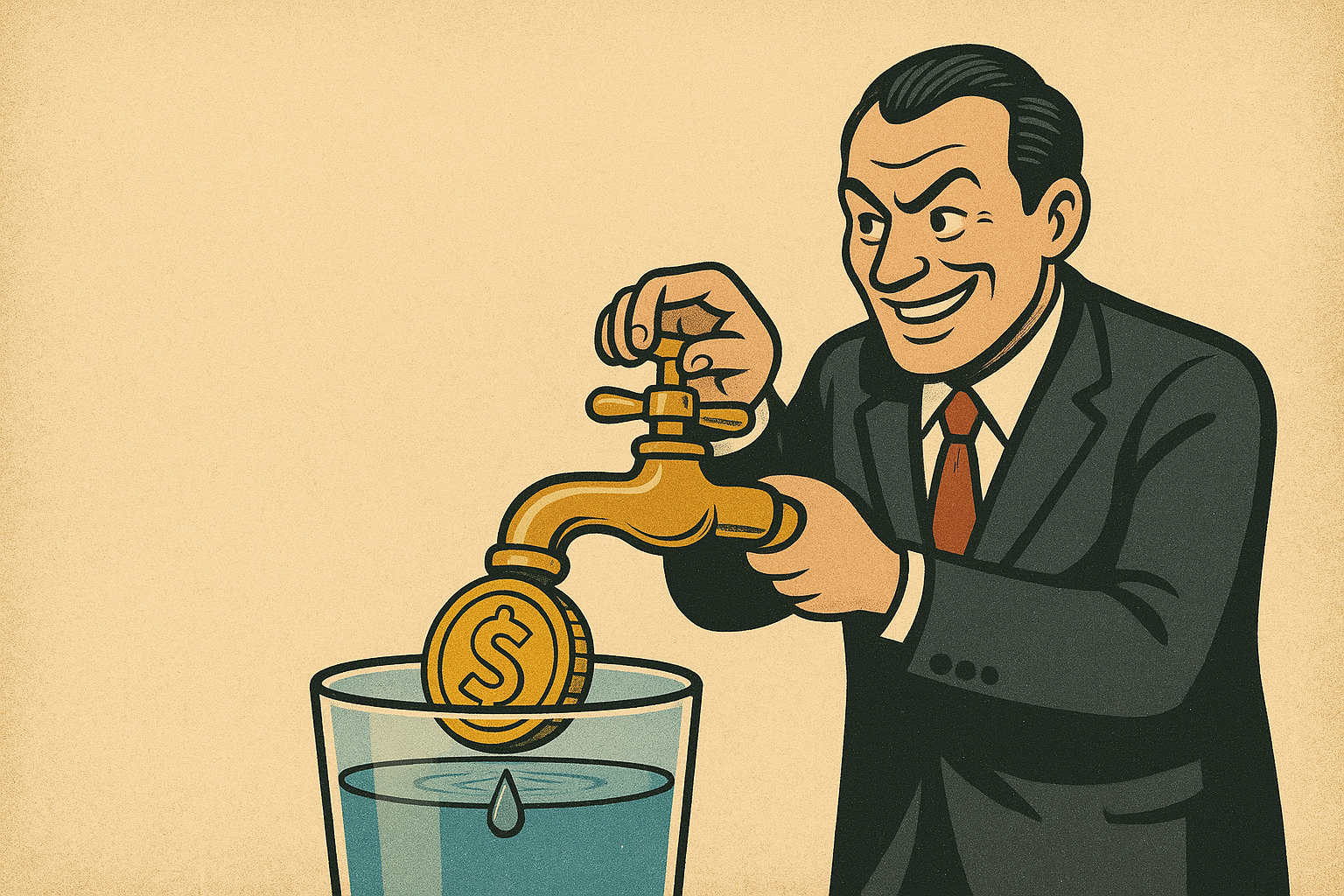
Remember when water used to just… fall from the sky? Cute, right? These days, the world’s most basic necessity is being gift-wrapped and sold back to us, sometimes literally in plastic bottles, other times as futures contracts on Wall Street. Because nothing screams “refreshing” like knowing your next sip has been monetized six ways before it touches your lips.
The right to water, or the right to profit?
Back in 2010, the United Nations bravely declared water a human right. Inspirational, really. Too bad the fine print didn’t include “unless a hedge fund gets there first”. Since then, private investors have rushed in to see how much money they can wring from your kitchen tap.
How to privatize life itself in five easy steps
Step 1: Consolidate utilities
Take two of the biggest water companies on the planet, Veolia and Suez, merge them, and voilà—you’ve got a mega-utility that sets rates from Paris boardrooms while your local council scratches its head over why your bill doubled.
Step 2: Invent water futures
Because if we can trade pork bellies and orange juice, why not bet on droughts? The launch of California’s water futures market means you can now hedge your thirst. Critics call it cruel; Wall Street calls it “liquidity”.
Step 3: Buy farmland just for the water under it
In Arizona’s Cibola Valley, investors bought land only to flip the Colorado River water rights to a suburb hundreds of miles away, Queen Creek. Locals called it a “Pandora’s box”. Investors called it Tuesday.
Step 4: Export the chaos globally
Want to see what happens when privatization meets real people? Look no further than Bolivia’s infamous Cochabamba Water War, where price hikes led to mass protests. Who knew that making the poor pay more for water would cause unrest? Everyone, actually.
Step 5: Build a market, then break it
Australia’s Murray–Darling Basin was supposed to be the Harvard Business School case study of efficient water trading. Instead, it became the Wild West of water markets, complete with allegations of manipulation and Indigenous communities left high and dry.
Inequality is the business model
When water becomes a commodity, three things happen:
-
Bills skyrocket (ask the folks of Cochabamba how fun that was).
-
Rural and Indigenous communities lose out when water is “reallocated” to whoever can pay the most.
-
Transparency disappears because water rights end up in the hands of shell companies and financial funds that treat secrecy as a feature, not a bug. See this investigation for a glimpse into the corporate labyrinth.
But hey, climate change makes it exciting
As droughts worsen, investors view water as a “growth market”. Cape Town nearly hit “Day Zero”, and you can bet someone somewhere was checking whether there’s an ETF for that.
The bottom line
Water is no longer just a human right—it’s an asset class, a revenue stream, a speculative bubble waiting to burst. The elites get dividends; you get a higher bill. At this rate, the next time it rains, don’t be surprised if someone from Wall Street shows up to charge you a “precipitation fee”.
Are DEI Rollbacks the Beginning of the End for Big Brands?
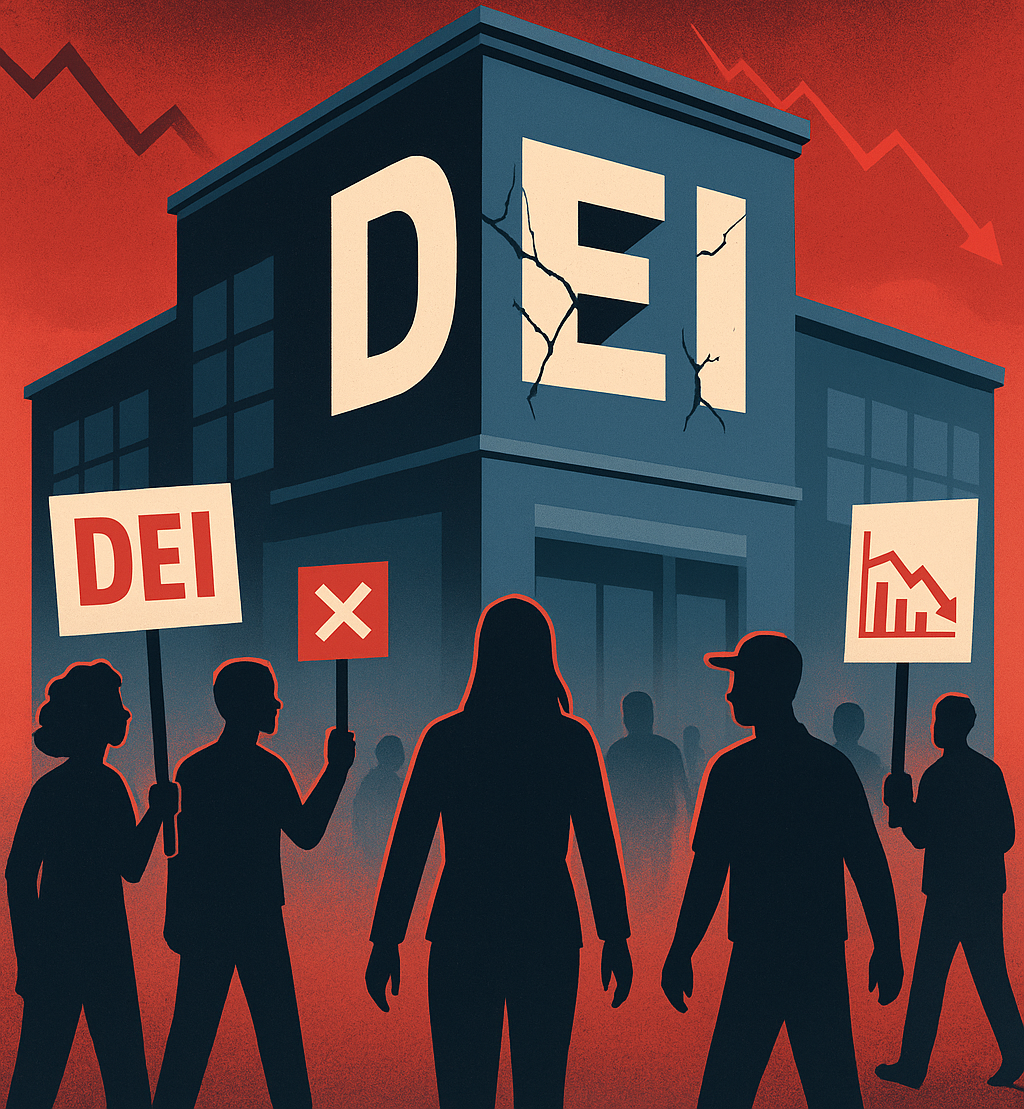
Across corporate America, Diversity, Equity, and Inclusion (DEI) initiatives are under fire. Major players like Amazon, Meta, McDonald’s, and Walmart have rolled back DEI programs in response to political pressure, lawsuits, and shifting cultural winds.
But as the case of Target shows, the decision to retreat from DEI may carry far greater costs than anticipated.
Target’s DEI Retreat: A Case Study in Backlash
Target was once considered a leader in inclusive business practices, with a $2 billion REACH initiative and strong supplier diversity programs. But in 2025, the retailer ended many of these efforts, rebranded others, and stepped away from public DEI rankings.
The reaction was swift.
-
Civil rights leaders and even the daughters of Target’s founders condemned the move as a betrayal of company values.
-
A nationwide boycott campaign, the “Target Fast”, drew over 250,000 pledges to avoid the brand.
-
Foot traffic dropped, sales weakened, and stock value plummeted.
By Q2 2025, the damage was clear: a 21% drop in net income, a 1.9% decline in comparable sales, and a year-to-date stock decline of over 30%. Ultimately, Target’s CEO resigned, underscoring how destabilizing the rollback had become.
The Consumer Contract: Why Values Matter
The Target case isn’t just about one company—it’s a warning for all big brands. As Business Insider notes, Target’s rollback exacerbated existing problems, such as messy stores and higher prices. But the bigger issue is how it fractured consumer trust.
Research shows that while only 39% of consumers report actively boycotting a brand in the past year, nearly 68% say they want companies to take a stance on social issues. More than half admit they’ve switched away from brands that don’t align with their values.
In other words, companies aren’t just selling products—they’re selling belief systems. When brands break that contract, consumers respond with their wallets.
Winners and Losers in the DEI Debate
The contrast is striking when you compare Target with companies that stayed the course.
-
Costco, for example, maintained its DEI commitments—and saw a 5.1% increase in foot traffic year-over-year.
-
Apple, which has consistently integrated DEI into its brand identity, continues to be rewarded with strong customer loyalty and market performance.
These examples suggest that standing firm on DEI may be less risky than retreating from it.
Lessons for CEOs and Business Leaders
-
Don’t Underestimate the Backlash – Consumers notice when companies walk back values, and the financial hit can be immediate.
-
Align DEI With Strategy, Not Politics – Treat DEI as a driver of innovation, customer trust, and competitive advantage—not as a trend to be abandoned under pressure.
-
Consistency Builds Trust – Abrupt reversals look inauthentic. Long-term commitment builds resilience, even in polarized times.
Final Thought
Are DEI rollbacks the beginning of the end for big brands? Not necessarily. But Target’s struggles show that retreating from inclusivity carries significant risks—not just reputational, but financial.
The lesson for business leaders is clear: when values and profits collide, betting against inclusion may be the costliest gamble of all.

5 Startups Changing the Future of Farming
The future of farming is unfolding faster than ever. From AI-powered weeders to vertical farms producing food in cities, agritech startups are reimagining how we grow and supply food. With the global population projected to reach 9.7 billion by 2050, agriculture faces the urgent challenge of feeding more people while using fewer resources. Here are five startups leading the charge.
1. FarmWise – The End of Chemical Weed Control?
California-based FarmWise is tackling one of the farming industry’s biggest challenges: weed control. Their autonomous robot, the Titan FT-35, uses AI, computer vision, and mechanical precision to remove weeds without chemicals.
Instead of buying expensive machines, farmers can pay per acre for the service. This business model reduces costs, while also limiting the use of herbicides linked to soil degradation and water pollution. FarmWise is proving that chemical-free, sustainable weed management is possible at scale.

2. Gamaya – Drones That See What Farmers Can’t
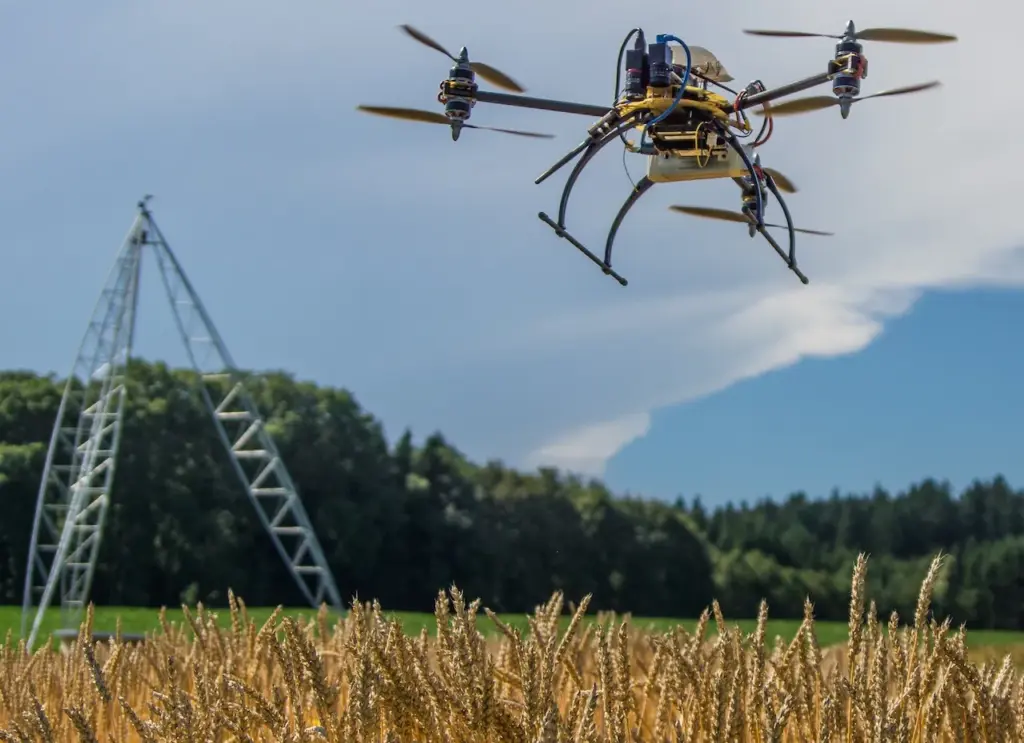
Swiss startup Gamaya is pioneering drone-based crop monitoring with hyperspectral imaging—a technology that captures dozens of light wavelengths invisible to the human eye.
These images help farmers spot plant diseases, nutrient deficiencies, and invasive weeds weeks before they become visible. This early detection allows for targeted interventions rather than broad, wasteful treatments. By turning farms into data-driven systems, Gamaya is helping boost yields, reduce fertilizer use, and support precision agriculture on a large scale.
3. Stacked Farm – Vertical Farming at Scale
Australian startup Stacked Farm is proving that vertical farming can move from boutique to industrial scale. Their automated facility covers 6,588 m², producing over 400 tonnes of leafy greens annually while using 95% less water than conventional farming.
Every step, from seeding to harvesting, is controlled by robotics and monitored in a pesticide-free environment. By reducing food miles and growing crops near urban centers, Stacked Farm lowers emissions while delivering fresher food to consumers. This model could reshape food supply chains in water-scarce and densely populated regions.
4. Muddy Machines – Robots in the Fields
In the UK, Muddy Machines is addressing farm labor shortages with autonomous robots. Their asparagus-harvesting robot, Sprout, uses AI and GPS to identify and carefully harvest crops, while another machine, Squirrel, transports produce around fields.
Labor shortages are a pressing issue—according to the UK National Farmers’ Union, thousands of tonnes of crops are lost each year due to insufficient seasonal workers. By automating these repetitive but delicate tasks, Muddy Machines is making farming more resilient, cost-effective, and future-proof.
5. Spotta – Smart Pest Control with IoT
UK-based Spotta combines IoT sensors and AI to tackle pests. Their pheromone-baited traps can detect pests like the red palm weevil up to three months earlier than traditional methods.
This means farmers can act before infestations spread, applying pesticides only where and when needed. Considering that pesticides account for $60 billion annually in global farming costs, Spotta’s solution has enormous potential to reduce expenses, protect crops, and limit environmental damage.
Why These Startups Matter
-
Sustainability – reduced pesticide, herbicide, and water use.
-
Efficiency – smarter monitoring and automation drive higher yields.
-
Resilience – technology addresses labor shortages and climate stress.
-
Farmer Empowerment – from IoT data dashboards to AI-driven decision-making, farmers gain actionable insights instead of relying on guesswork.
The Future of Farming
Imagine fields maintained by autonomous weeders, skies dotted with drone scouts, cities fed by vertical farms, and pests detected months in advance by AI sensors.
This is no longer science fiction—it’s happening now. With startups like FarmWise, Gamaya, Stacked Farm, Muddy Machines, and Spotta, the future of farming is set to be smarter, cleaner, and far more resilient.